
The most critical transformation in Kubernetes infrastructure selection for 2026 is happening now. While AWS EKS monthly costs reach over $400 for standard configurations, Kubernetes v1.36 "Haru" stabilizes revolutionary security features that, combined with K3s lightweight technology, make "full K8s operations under $400 per month" a reality that overturns conventional wisdom.
The path to achieve 60% cost reduction for managed Kubernetes while maintaining enterprise-grade security and operational excellence is now clearly visible. With Kubo, built on K3s, you can leverage AI-Driven Deployment for operational automation and v1.36's latest features at no additional cost.
Kubernetes v1.36 "Haru" Brings a Security Revolution
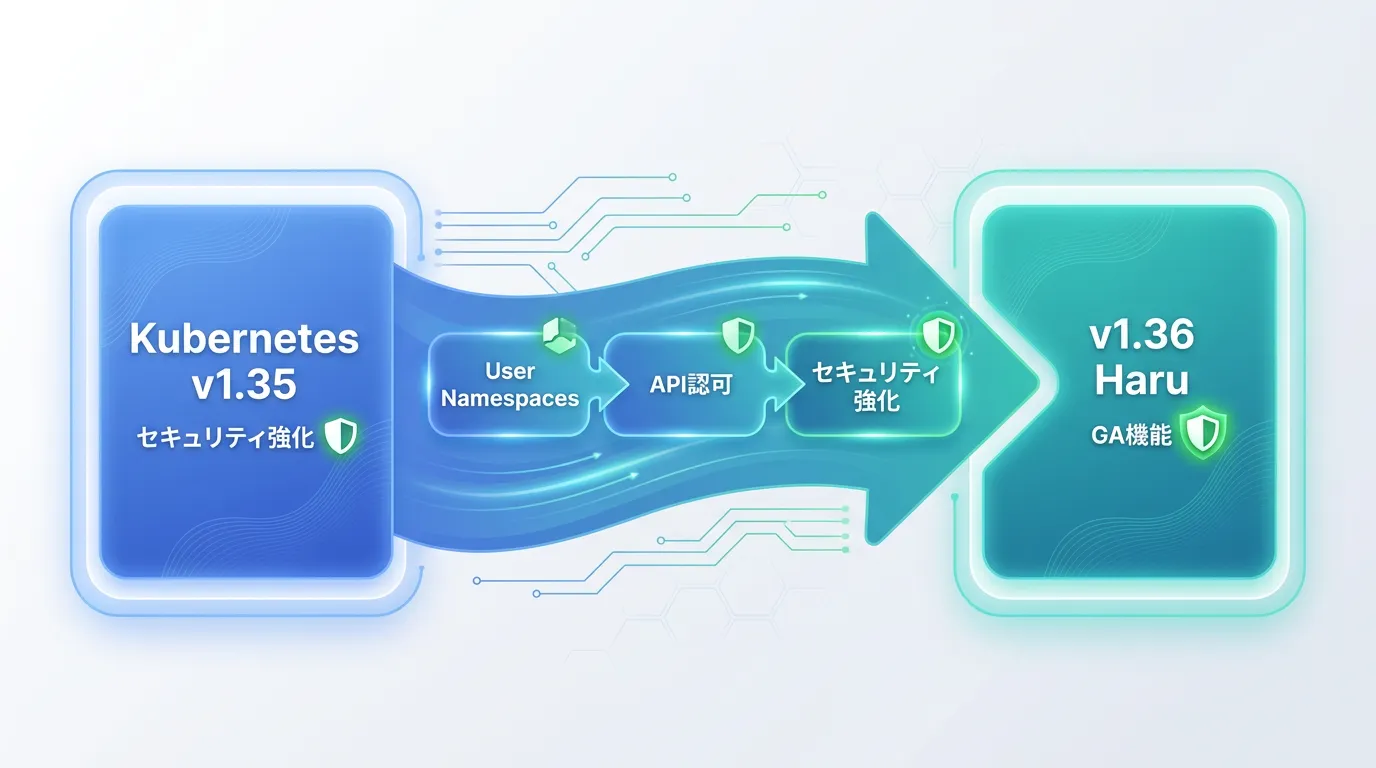
Kubernetes v1.36 "Haru" is a security revolution release where 18 out of 70 enhancements graduated to stable (GA). Most notably, User Namespaces has reached general availability.
Multi-layered Defense with User Namespaces
User Namespaces GA maps container root users to non-privileged users on the host, providing fundamental protection from Container Escape vulnerabilities like CVE-2024-21626. This vulnerability exploited internal file descriptor leaks in runc to enable access from containers to host filesystems.
Traditional container security suffered weeks of time lag between vulnerability discovery and fixes, but User Namespaces invalidates this risk window entirely.
Practical Value of Fine-grained Kubelet API Authorization
The stabilization of Fine-grained Kubelet API Authorization enables minimal privilege access control required for monitoring and observability, moving away from overly broad nodes/proxy permissions. As mentioned in Google Cloud's official documentation, this supports Kubernetes adoption in compliance-sensitive environments.
In practice, you can grant Prometheus monitoring agents only kubelet metrics access permissions while eliminating unnecessary node management privileges. This is extremely effective as countermeasures against supply chain attacks that have surged in 2026.
"Lightweight Means Compromise" is Obsolete - Enterprise-grade Operations with K3s + v1.36
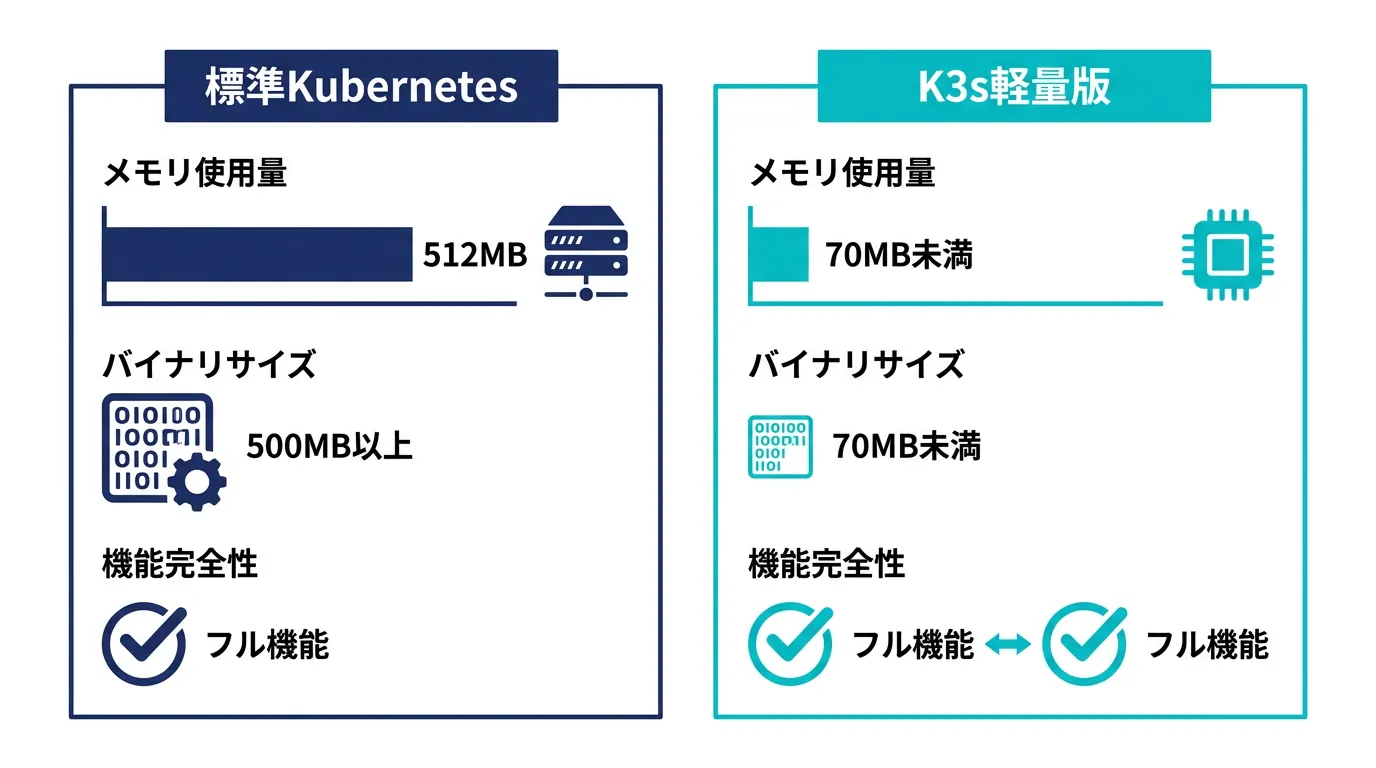
The biggest misconception about K3s lightweight Kubernetes is the preconception that "lightweight means functional limitations." However, according to the K3s official site, K3s v1.36.1+k3s1 delivers all Kubernetes v1.36 features in a single binary under 70MB with a memory footprint under 512MB.
Unified Architecture from Edge to Cloud
K3s's true value isn't just lightweight design. It enables operation with the same Kubernetes architecture from factory edge environments to cloud production environments.
Traditional managed Kubernetes forced different Kubernetes implementations between edge and cloud environments, scattering operational knowledge accumulation. With K3s-based unified infrastructure, operational knowledge acquired once can be utilized across all environments.
Actual enterprise adoption examples:
- Manufacturing: Edge K3s in factories → Cloud K3s managed operations unified
- Financial institutions: On-premise K3s → Hybrid cloud K3s integration
- SaaS companies: Development environment K3s → Production environment managed K3s consistency
Kubo provides this unified architecture as a managed service, realizing "the same infrastructure for edge and cloud" at realistic costs.
Managed Kubernetes Pricing Comparison 2026 - Exposing EKS, GKE, AKS "Hidden Costs"
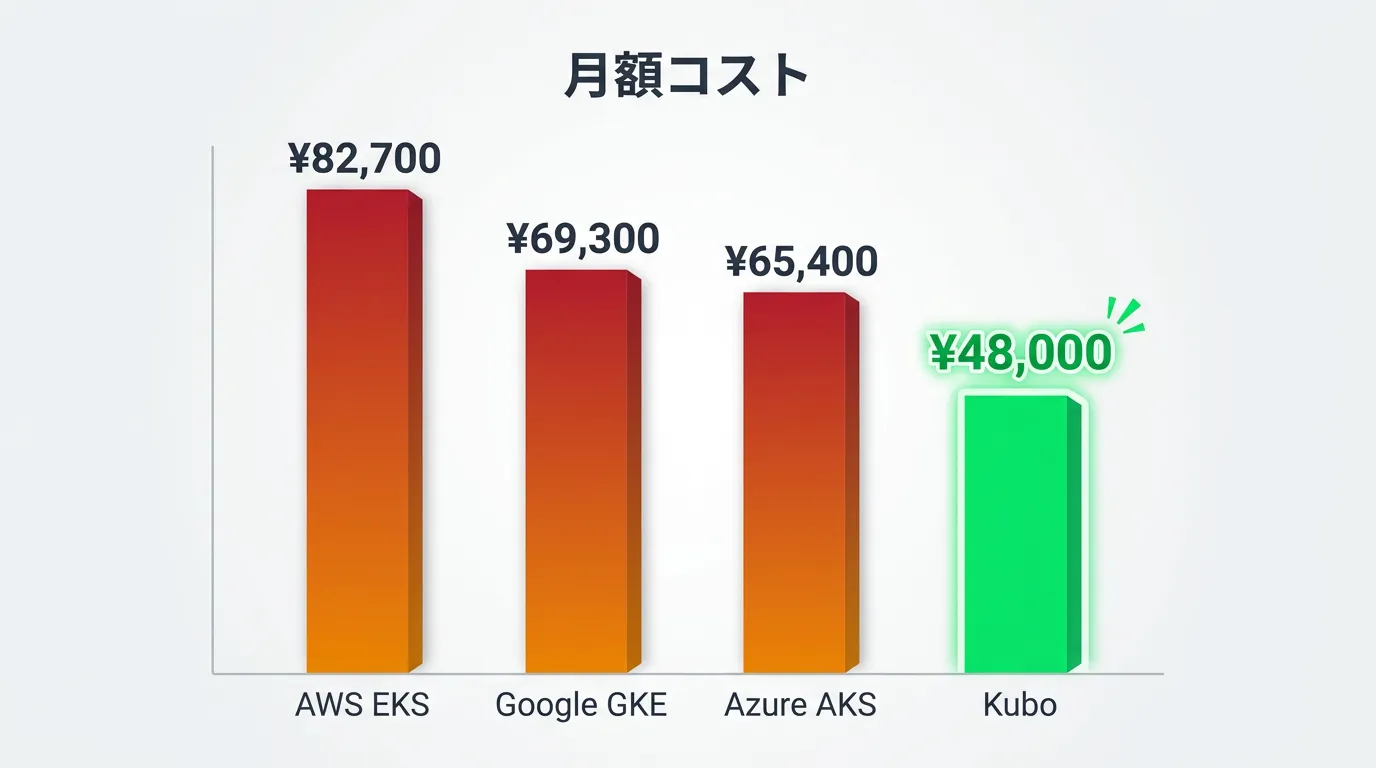
Detailed analysis of major managed Kubernetes services' cost structures in 2026 reveals that "hidden costs" invisible in surface pricing tables dramatically inflate operational expenses.
AWS EKS Actual Cost Structure
While the AWS EKS official price list shows control plane at $0.10/hour ($73/month), this is just the tip of the iceberg.
Actual monthly costs for 4vCPU × 3 node configuration:
- Control plane: $73
- EC2 Worker Nodes (m5.xlarge × 3): $432
- Auto Mode surcharge (12% fee): $52
- Network & NAT Gateway: $90
- Total: $647 (approx. ¥82,700)
According to CloudBurn's analysis, the 12% surcharge for Auto Mode usage is not covered by Savings Plans, creating a substantial cost increase factor.
Google GKE's Sophisticated Pricing Model
Google GKE promotes transparent pay-per-use in Autopilot mode, but actual operations require complex optimization.
GKE Autopilot for same configuration:
- Cluster management fee: $73 (after 1 free cluster applied)
- vCPU time charges: $312
- Memory charges: $156
- Total: $541 (approx. ¥69,300)
"Real Cost" of Managed Kubernetes
Sedai's comparative study identifies discrepancies between nominal pricing and actual operational costs, revealing that many companies pay 2-3 times their expectations.
Comparison with Kubo:
| Provider | Monthly Cost | Hidden Costs |
|---|---|---|
| AWS EKS | ¥82,700 | Auto Mode, network charges |
| Google GKE | ¥69,300 | Resource optimization complexity |
| Azure AKS | ¥65,400 | Storage & monitoring charges |
| Kubo | ¥48,000 | None (full features included) |
Kubo's pricing structure includes monitoring (Prometheus + Grafana), GitOps (ArgoCD/Flux integration), and certificate management (cert-manager) in transparent pricing. There are no hidden costs.
Real 2026 Security Threats and Kubernetes Countermeasures
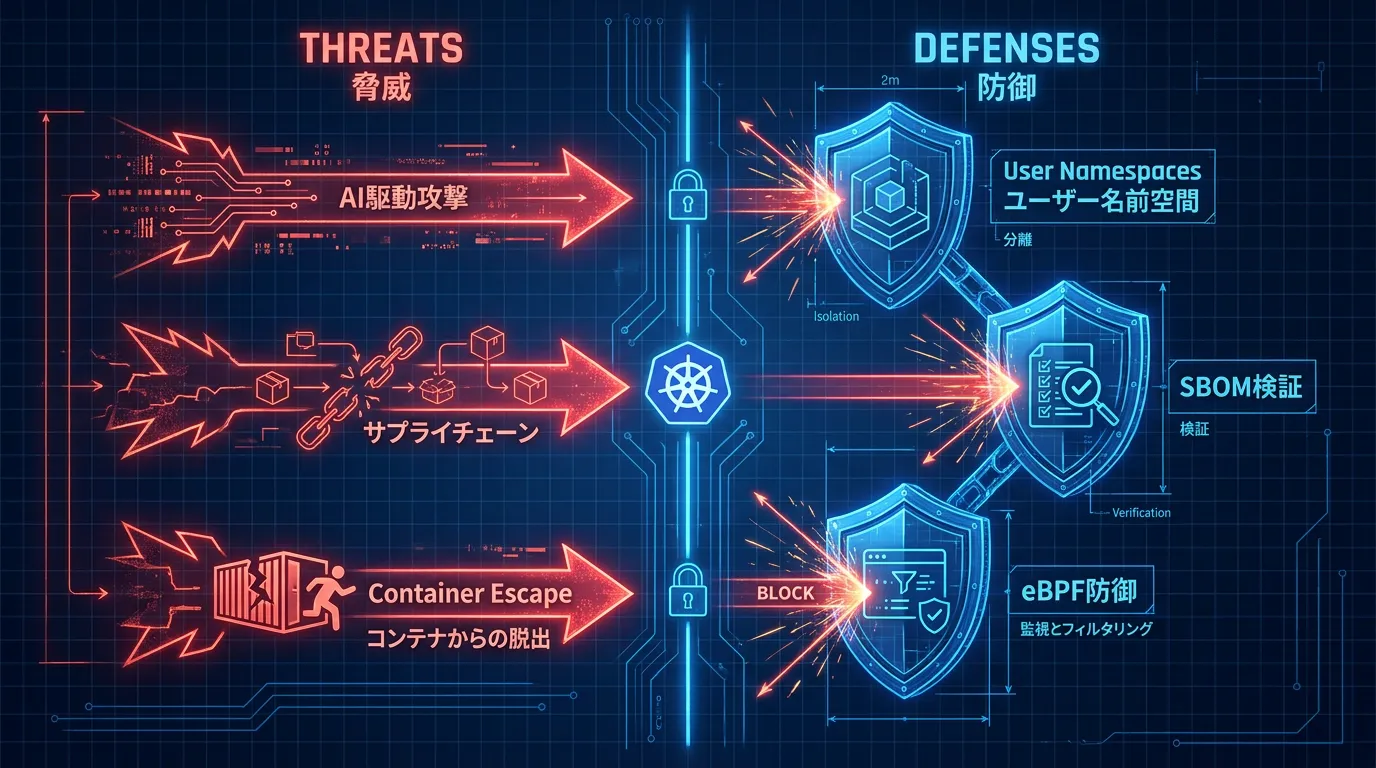
Security threats surrounding Kubernetes in 2026 have evolved to levels that traditional static defenses cannot handle. Let's examine the latest threat trends and countermeasures realized in v1.36.
AI-driven Attacks and Machine Learning Intrusion Methods
The emerging threat in 2026 is AI-driven attacks. Attackers deploy sophisticated attacks using machine learning algorithms to evade traditional signature-based detection.
Traditional static network policies cannot keep up with such dynamic attack patterns. eBPF-based Cilium has become a game-changer for this challenge.
Cilium's Revolutionary Approach:
- Real-time L7 protocol-level anomaly detection
- Dynamic network policy adjustment via machine learning
- Container-level behavior monitoring and blocking
2026 security research reports that eBPF adoption reduced security incidents by 68% for adopting companies.
Container Escape Vulnerability: Lessons from CVE-2024-21626
The runc CVE-2024-21626 vulnerability enabled privilege escalation from containers to hosts by exploiting file descriptor leaks. The impact range was runc v1.0.0-rc93 to v1.1.11, covering all versions from the past 3 years.
Limitations of Traditional Countermeasures:
- Risk window of weeks until patch application
- Fundamental powerlessness against unknown vulnerabilities
- Wide blast radius when attacks succeed
Fundamental Countermeasures with v1.36 User Namespaces:
- Map container root privileges to host non-privileged users
- Prevent actual host damage even if Container Escape occurs
- Structural defense against zero-day attacks
Escalation of Supply Chain Attacks
The biggest threat in 2026 is supply chain attacks. Malicious code injection into container images, Helm charts, and Kubernetes operators has surged.
Specific Implementation of Countermeasures:
- Image Signing & Verification: Signature verification via Sigstore
- Software Bill-of-Materials (SBOM): Transparency of all dependencies
- Admission Controller: Block deployment of unsigned images
- Runtime Security: Real-time behavior monitoring via eBPF
Kubo provides these advanced security features as standard equipment, available at no additional charge.
Realistic Migration Strategy - Starting Modern Infrastructure with "K3s Lightweight Managed"
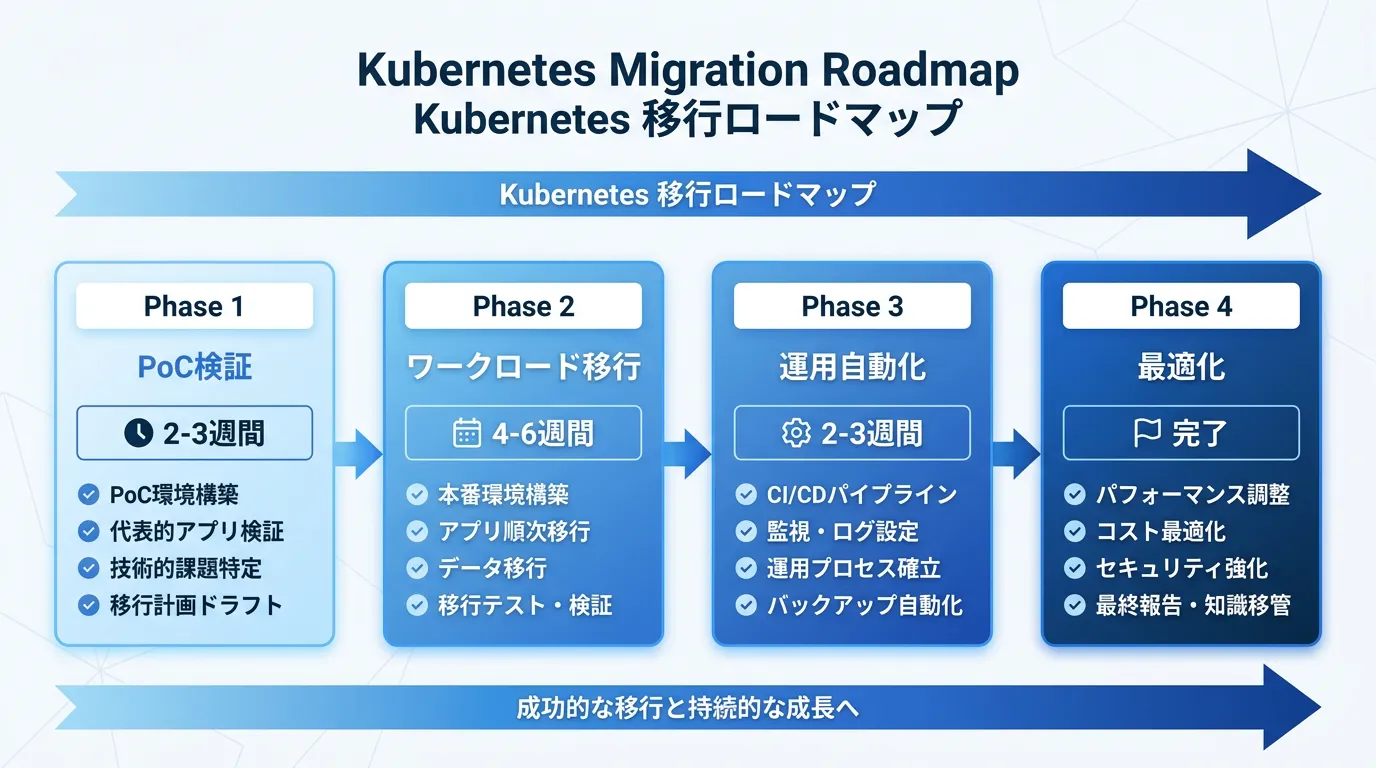
Migration from existing infrastructure to K3s managed operations can be completed in 6-12 weeks with proper strategy. Let's examine actual migration patterns and success cases.
Phase 1: Non-production PoC and Validation (2-3 weeks)
Goal: K3s lightweight Kubernetes operation verification and performance evaluation
Execution contents:
- Containerization of existing applications and testing in K3s environment
- CI/CD pipeline integration verification
- Monitoring and log collection functionality verification
- Security policy implementation testing
With Kubo, PoC environments can be built in 30 minutes, and GitOps tool (ArgoCD/Flux) integration completes with one click.
Phase 2: Gradual Workload Migration (4-6 weeks)
Goal: Start production migration from low-risk workloads
Migration Priority Order:
- Stateless Web Applications: Minimal migration risk
- Batch Jobs & Worker Processes: Limited impact of downtime
- Microservices: Gradual migration by service units
- Stateful Services: Careful execution of data migration plans
Phase 3: Operation Automation and Cost Optimization (2-3 weeks)
Goal: Realize operational burden reduction and cost benefits
Automation Targets:
- HPA/VPA: Automatic scaling based on resource usage
- Pod Disruption Budget: Automatic updates maintaining availability
- Cluster Autoscaler: Dynamic adjustment of node count
- Cost Monitoring: Visualization of resource usage and costs
Actual Cost Reduction Effects:
- Infrastructure costs: ¥82,700 → ¥48,000 monthly (42% reduction)
- Operational hours: 20 hours/week → 5 hours/week (75% reduction)
- Failure recovery time: 2 hours → 15 minutes (87% reduction)
Benefits of Vendor Lock-in Avoidance
The greatest advantage of K3s-based Kubo is standards compliance through Pure Kubernetes. It doesn't depend on AWS/Azure-specific proprietary extensions, so it doesn't limit future options.
Specific Protection Effects:
- YAML Manifests: Migration to other environments possible with Kubernetes standards
- Helm Charts: CNCF compliant with broad ecosystem compatibility
- Operational Knowledge: Standard Kubernetes knowledge utilized in other environments
- Tool Selection: Standard tools like kubectl, Helm, Istio used as-is
Practical Value of AI-Driven Deployment
Kubo's unique AI-Driven Deployment functionality makes "deployment instructions in natural language" a reality.
Traditional Challenges:
# Manual creation of complex YAML manifests
apiVersion: apps/v1
kind: Deployment
metadata:
  name: web-app
spec:
  replicas: 3
  selector:
    matchLabels:
      app: web-app
# ...dozens of lines of YAML hell
With AI-Driven Deployment:
"Deploy an Nginx-based web app with 3 replicas and expose it via LoadBalancer"
This single sentence automatically executes appropriate YAML manifest generation, security policy application, and monitoring setup.
Summary - The Path Infrastructure Engineers Should Choose in 2026
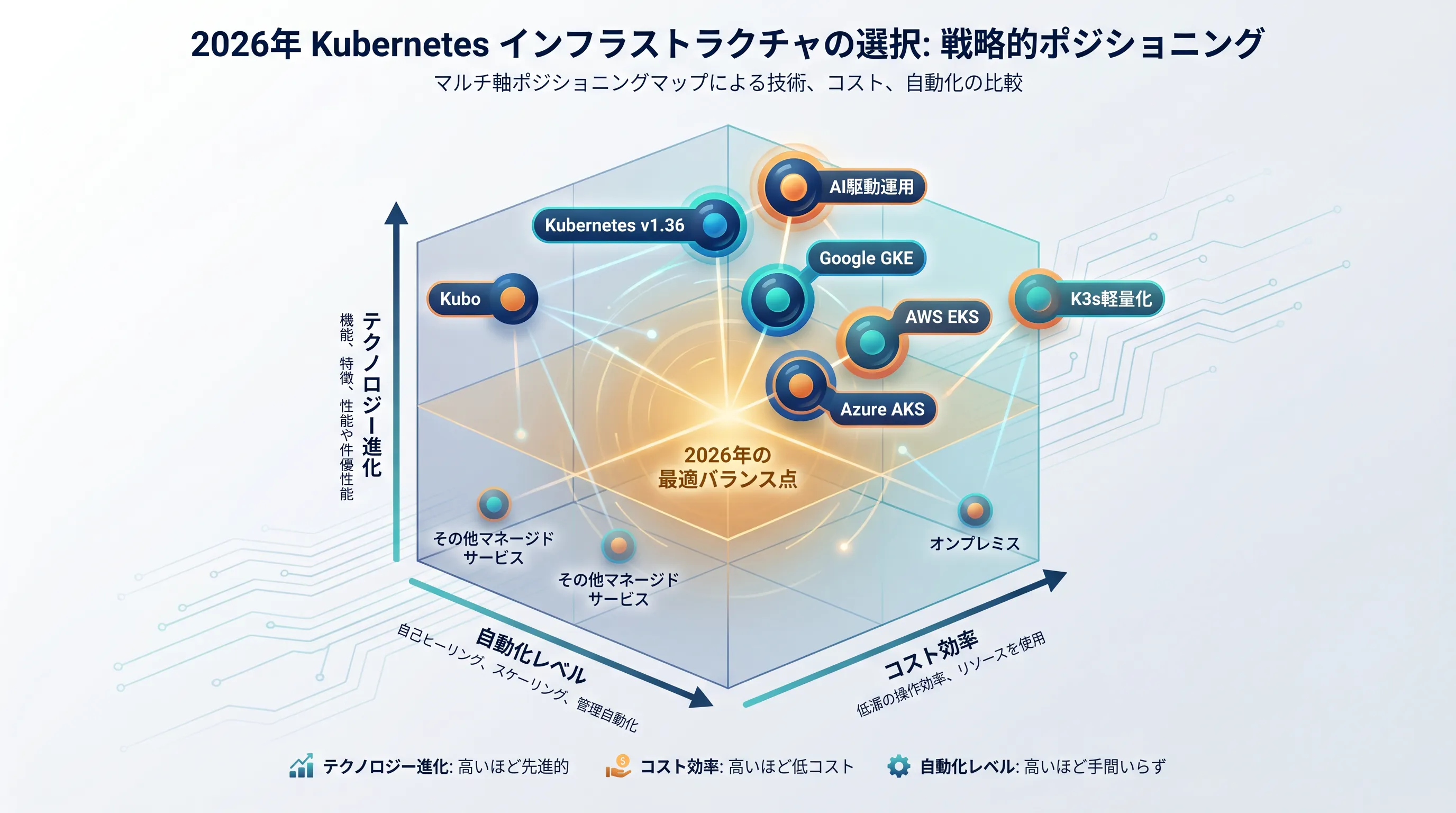
In Kubernetes infrastructure selection for the v1.36 era, three-axis optimization of security, cost, and operability is the key to success.
Leveraging v1.36 Security Enhancements:
- Fundamental Container Escape countermeasures with User Namespaces
- Zero Trust architecture with Fine-grained Authorization
- Next-generation network security with eBPF/Cilium
Value Brought by K3s Lightweight:
- Sub-70MB footprint with 512MB memory operation
- Unified architecture from edge to cloud
- CNCF compliant vendor lock-in avoidance
Realistic Choice for Managed Services:
- EKS's ¥82,700/month hidden cost structure
- GKE optimization operational complexity
- Kubo's ¥48,000/month transparent pricing
There's no longer any need to worry about EKS/AKS high costs, complexity, and lock-in for 2026 infrastructure strategy. With K3s-based Kubo, you can realize overwhelming cost efficiency and operational ease while maintaining full Kubernetes functionality.
As the next step, would you like to diagnose for free whether your current Kubernetes operational costs can be reduced by 60%? Our Kubo expert team will propose specific cost reduction plans and migration roadmaps.
The path to obtaining advanced Kubernetes infrastructure for the v1.36 era at less than half the traditional cost is here now.